Recent Posts
Categories
Stay Informed
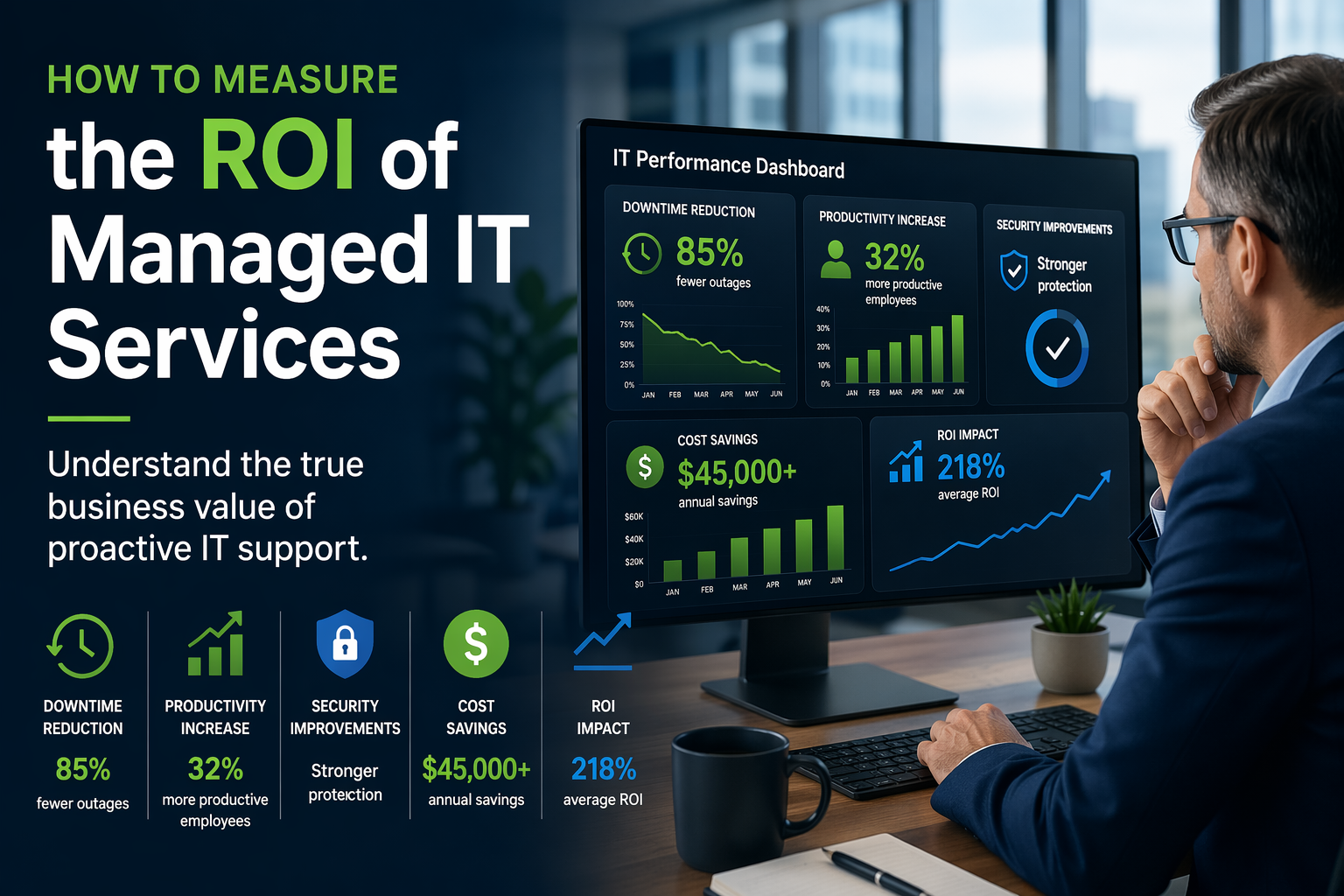
When business owners evaluate expenses, most investments have a clear return. Marketing generates leads. Equipment increases production. New employees improve capacity.
But what about IT? Many organizations view technology as a necessary expense rather than a strategic investment. As a result, they often ask: “How do I know if my Managed IT Services are worth the cost?”
The answer lies in understanding the Return on Investment (ROI) of your technology. The good news is that Managed IT Services deliver measurable value through increased productivity, reduced downtime, improved cybersecurity, predictable costs, and business continuity.
Let’s look at how business owners can measure the true ROI of Managed IT Services.
What Is ROI in Managed IT Services?
ROI, or Return on Investment, measures the value you receive compared to the amount you spend.
The simplest formula is: ROI = (Benefits Received – Cost of Service) ÷ Cost of Service × 100
The challenge is that many of the benefits of Managed IT Services are not as obvious as direct revenue generation.
Managed IT Services create value by:
- Reducing downtime
- Increasing employee productivity
- Preventing cybersecurity incidents
- Eliminating surprise IT expenses
- Improving business continuity
- Providing strategic technology planning
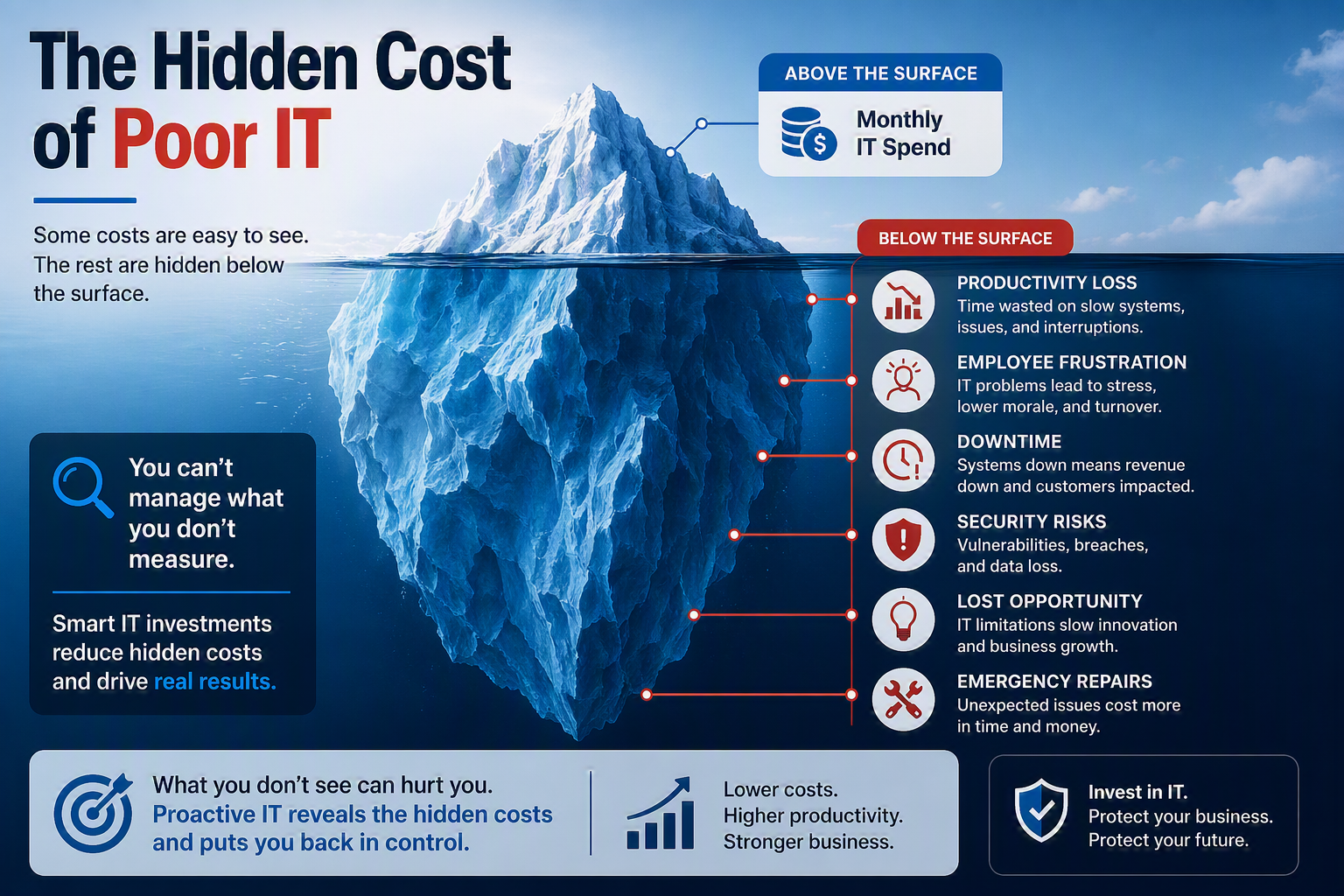
Rather than asking: “How much does IT cost me?” Business owners should ask: “How much would poor IT cost me?”
1. Measure Downtime Reduction
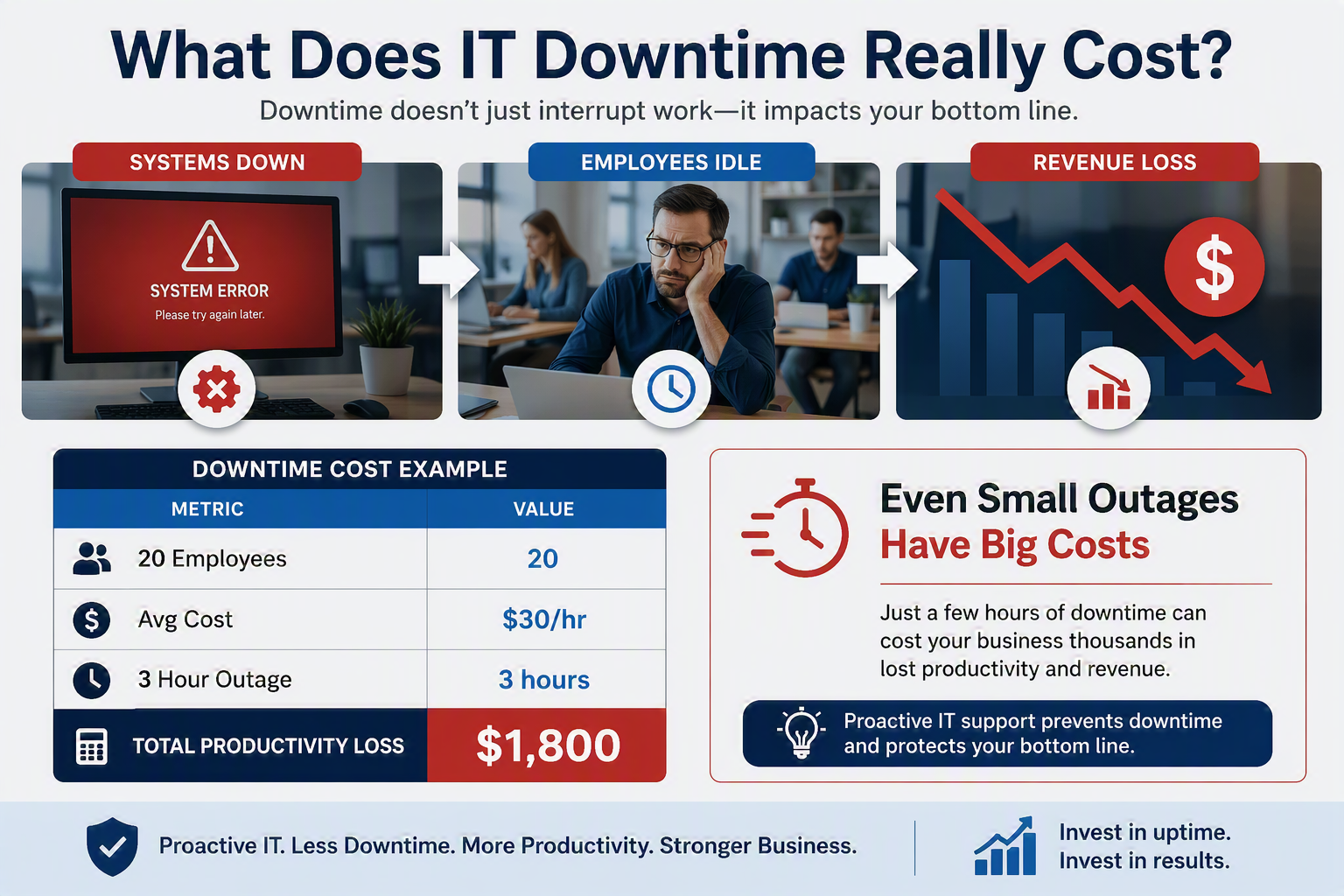
One of the biggest contributors to ROI is minimizing downtime.
Consider:
- Employees unable to work
- Servers offline
- Internet outages
- Email disruptions
- Application failures
Even minor interruptions can have significant financial impacts. Managed Service Providers (MSPs) use proactive monitoring, maintenance, and patch management to identify issues before they become business disruptions. ISOCNET’s Managed Services model emphasizes proactive monitoring and management to keep systems running at peak performance and respond before problems become larger issues.
Example:
20 Employees × $30/hour average burdened cost. If an outage prevents work for 3 hours: 20 × $30 × 3 = $1,800 in lost productivity
Now imagine preventing multiple outages throughout the year. The savings add up quickly.
2. Track Employee Productivity Gains
Technology issues create frustration and lost productivity.
How much time do employees spend:
- Waiting for support
- Troubleshooting printers
- Fighting slow computers
- Searching for files
- Dealing with software issues
Managed IT Services improve productivity through:
- Faster issue resolution
- Standardized systems
- Proactive maintenance
- Better user support
ISOCNET’s Managed IT Services are specifically designed to help businesses increase efficiency, reduce costs, and allow employees to focus on business objectives instead of technology problems.
Example:
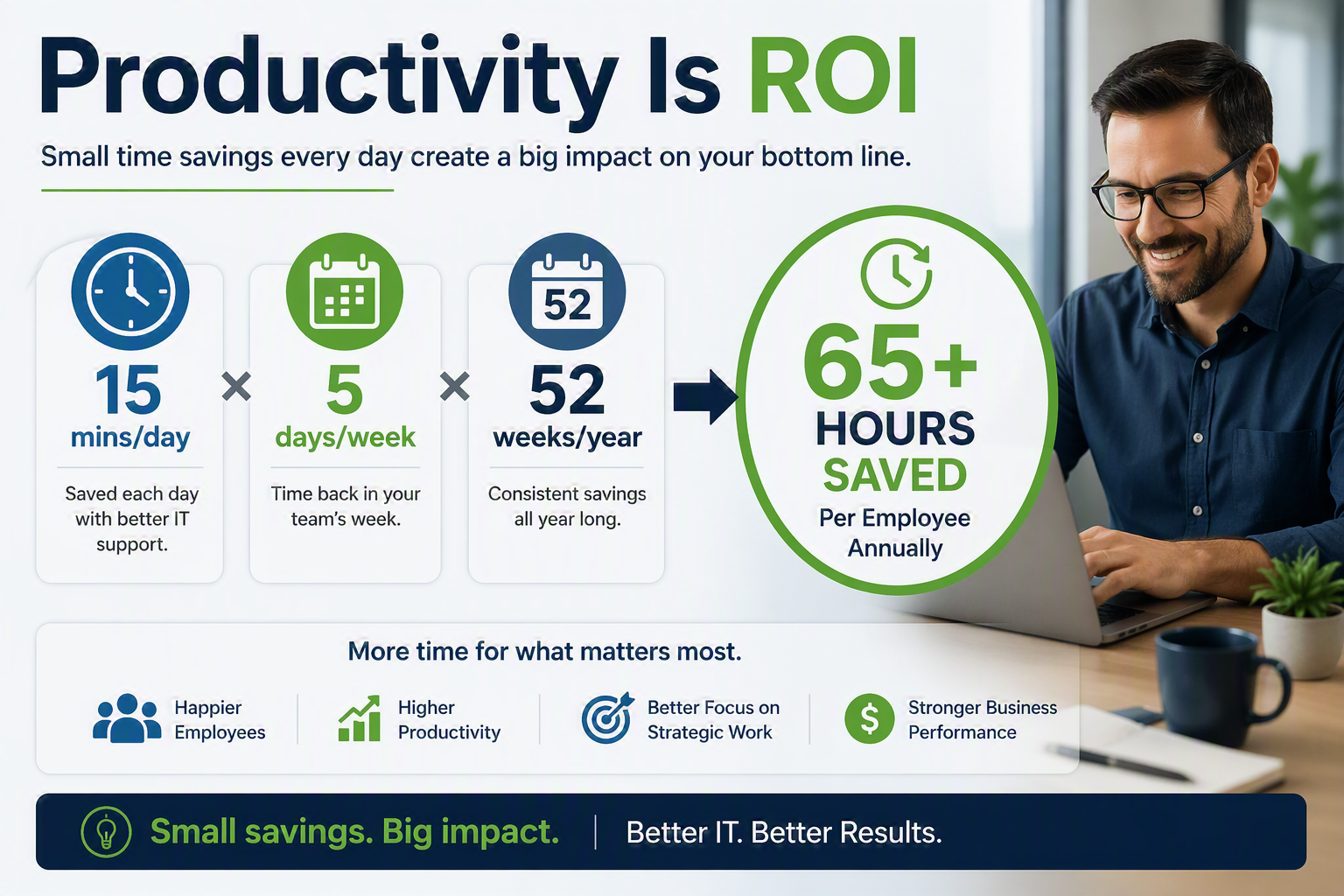
25 Employees | 15 minutes saved per day | 25 × 15 minutes = 375 minutes daily | 375 minutes = 6.25 hours per day
Over a year, that productivity gain can equal hundreds of additional productive work hours.
3. Calculate Avoided Cybersecurity Costs
Many businesses evaluate cybersecurity only after experiencing an incident.
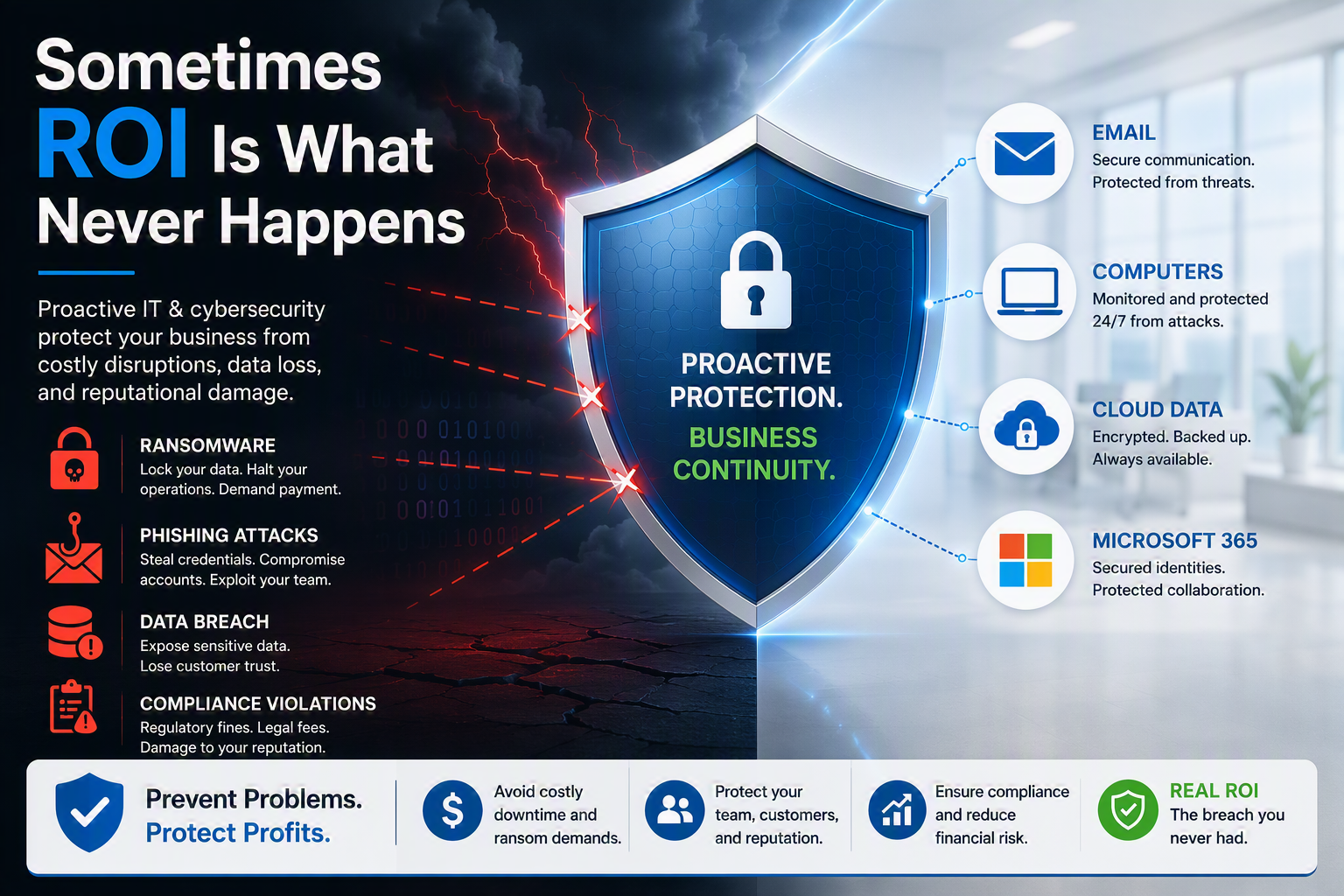
The reality is that Managed IT Services significantly reduce risk through:
- Endpoint protection
- Email security
- Security monitoring
- Patch management
- Multi-factor authentication
- Employee security awareness training
- Backup and disaster recovery
ISOCNET’s managed offerings include monitoring, endpoint detection and response, web filtering, backups, security awareness training, and annual risk assessments.
Ask Yourself…
What would the cost be if:
- Your email was compromised?
- Your accounting system was encrypted by ransomware?
- Your customer database became inaccessible?
Preventing a single major security incident could justify years of Managed IT investment.
As highlighted in ISOCNET’s cybersecurity guidance, the cost of a proactive security strategy is predictable; the cost of an incident rarely is.
4. Compare Internal IT Costs vs. Managed Services
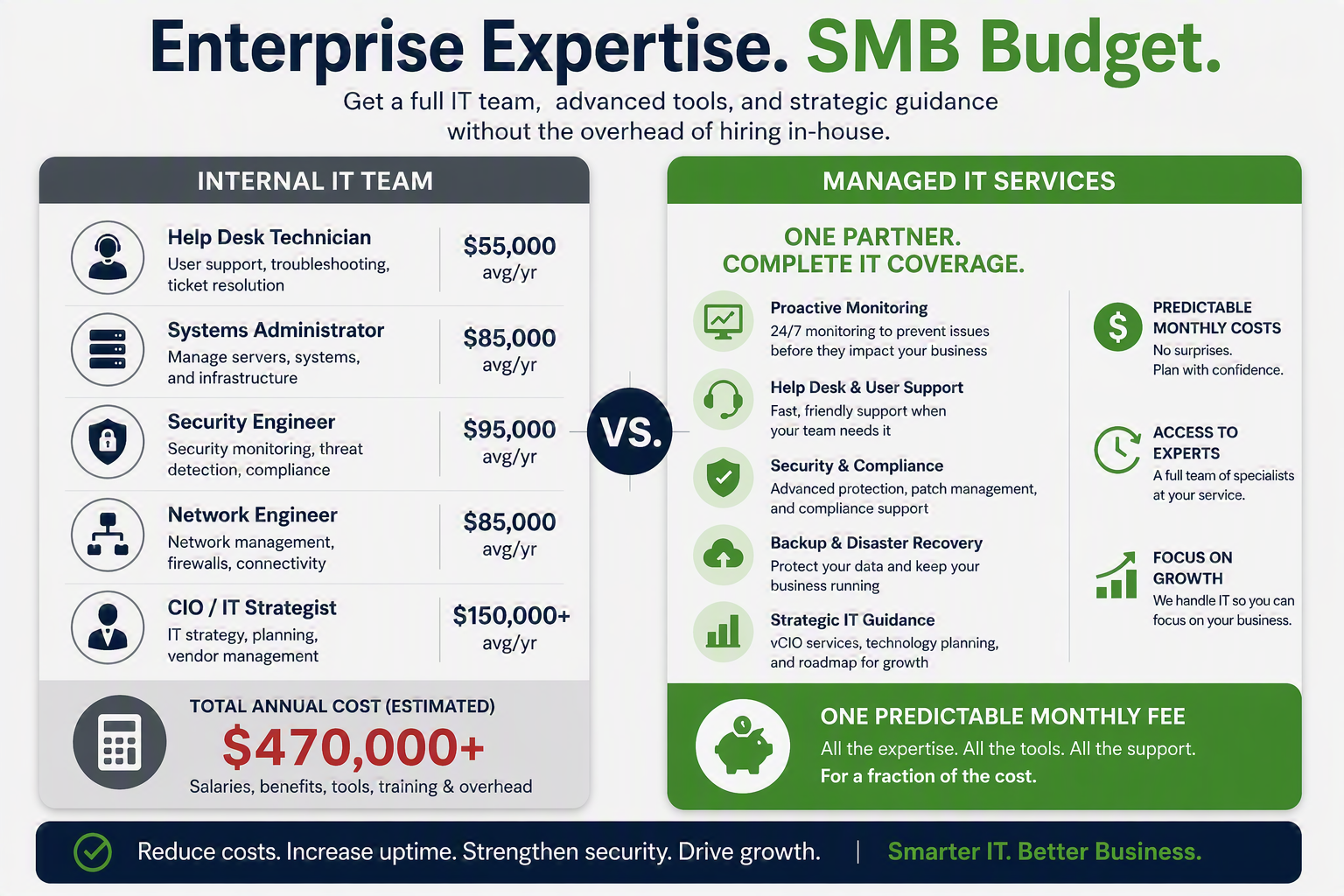
Many organizations underestimate the true cost of maintaining IT internally.
Internal IT expenses often include:
- Salaries
- Benefits
- Training
- Certifications
- Software tools
- Security platforms
- Monitoring systems
- Vacation and coverage limitations
With Managed IT Services, businesses gain access to an entire team of specialists for a predictable monthly investment. ISOCNET’s Managed Services approach allows companies to leverage enterprise-level expertise without hiring an entire in-house IT department.
Consider:
Would it cost more to hire:
- A Systems Administrator
- A Cybersecurity Specialist
- A Cloud Expert
- A Help Desk Technician
- A Technology Strategist
Or partner with a team that provides all of those skillsets?
5. Evaluate Strategic Business Impact
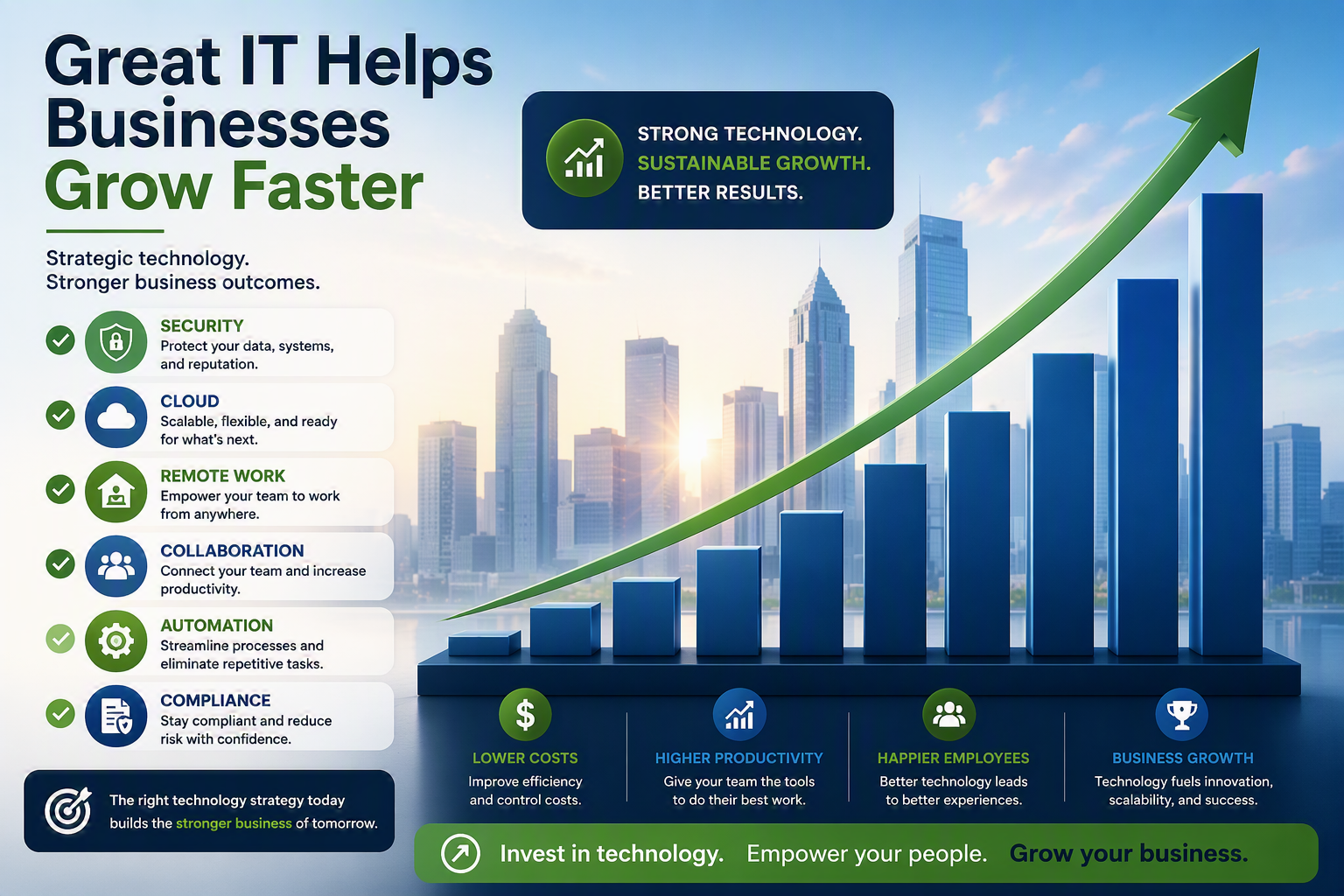
The highest ROI isn’t always found in cost savings. It’s often found in business growth.
Managed IT providers help businesses:
- Adopt new technologies
- Improve processes
- Support remote work
- Scale operations
- Develop cybersecurity strategies
- Align technology with business goals
ISOCNET’s Managed IT Services focus on total alignment between business goals and technology strategy.
Ask yourself:
✅ Did technology help us serve customers faster?
✅ Did technology support growth initiatives?
✅ Did technology reduce operational bottlenecks?
✅ Did technology make employees more productive?
If the answer is yes, your ROI extends far beyond support tickets.
6. Review Key Performance Indicators (KPIs)
Business owners should monitor IT performance the same way they monitor sales and operations.
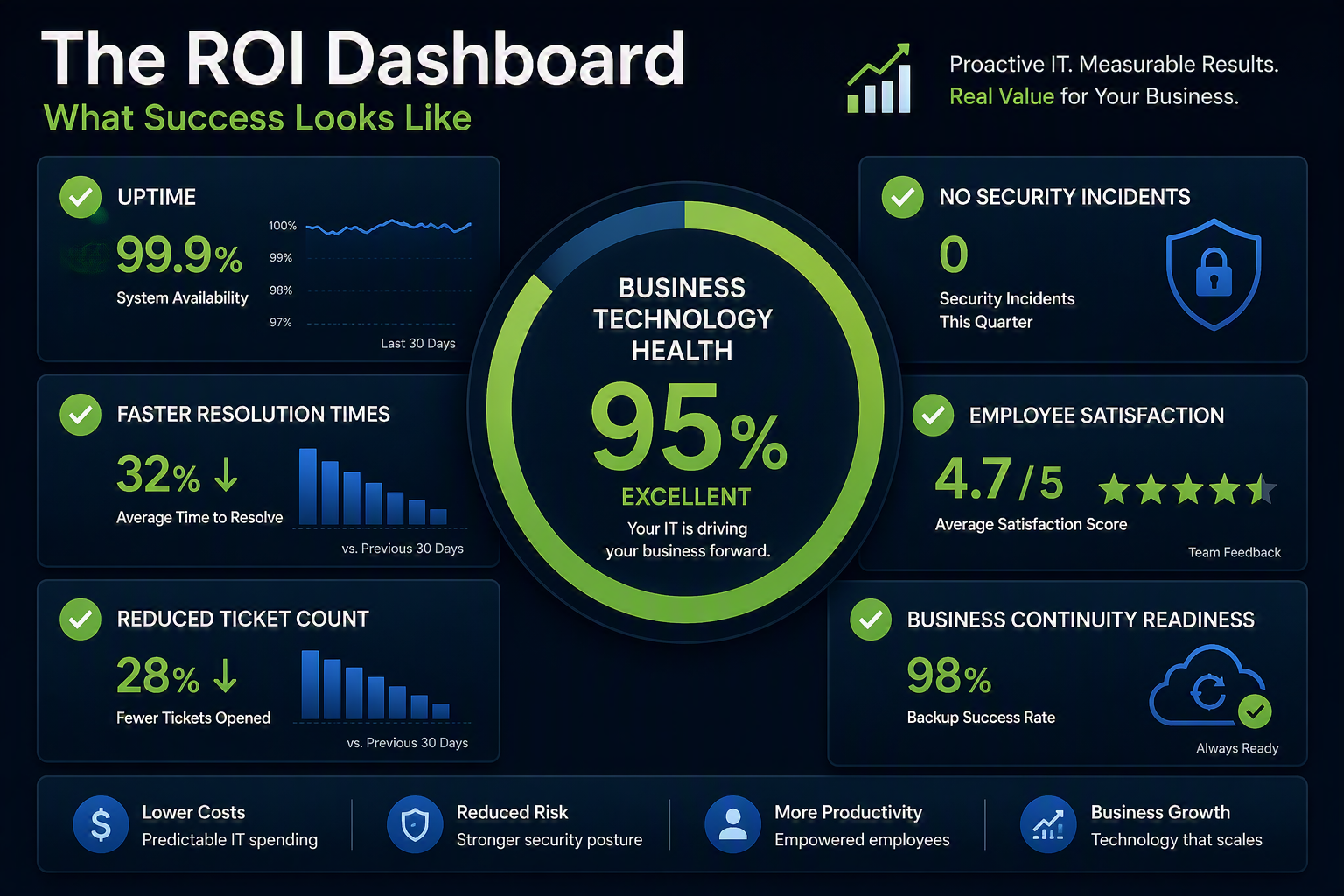
Useful KPIs include:
- Uptime Percentage – Target: 99.9% or higher
- Average Response Time – How quickly support responds
- Average Resolution Time – How quickly issues are resolved
- Cybersecurity Incidents – Monthly and annual trends
- Employee Satisfaction – How users feel about technology
- Support Ticket Volume – Recurring issues may identify improvement opportunities
- Business Continuity Readiness – Can operations continue during a disruption?
Monitoring these metrics provides a clearer picture of IT performance and overall business value.
The Hidden ROI Most Businesses Miss
The most overlooked benefit of Managed IT Services is peace of mind.
Business owners already have enough to worry about:
- Customers
- Employees
- Revenue
- Compliance
- Operations
Managed IT Services remove much of the technology burden by providing:
- Continuous monitoring
- Strategic guidance
- Vendor management
- Security oversight
- Backup and recovery planning
ISOCNET’s Managed Services model positions technology as an extension of your organization, allowing leadership to focus on growth rather than IT challenges.
The Bottom Line
The ROI of Managed IT Services goes far beyond fixing computers.
The true value comes from:
- Reduced downtime
- Increased employee productivity
- Improved cybersecurity
- Predictable IT costs
- Better business continuity
- Strategic technology planning
- Support for future growth
When measured properly, Managed IT Services are not simply an expense—they are an investment in the stability, security, and success of your business.
The question isn’t: “How much does Managed IT cost?”
The better question is: “How much value does reliable technology create for my business?”
For most organizations, the answer is far more than they realize.
Ready to Evaluate Your IT ROI?
ISOCNET helps businesses throughout the Greater Cincinnati and Northern Kentucky region understand the true value of their technology investments.
Whether you’re currently managing IT internally or working with another provider, we can help you assess your technology environment and identify opportunities to improve productivity, security, and business performance.
Schedule a complimentary technology review and discover where your biggest IT ROI opportunities may be hiding.