
Recent Posts
Categories
Stay Informed
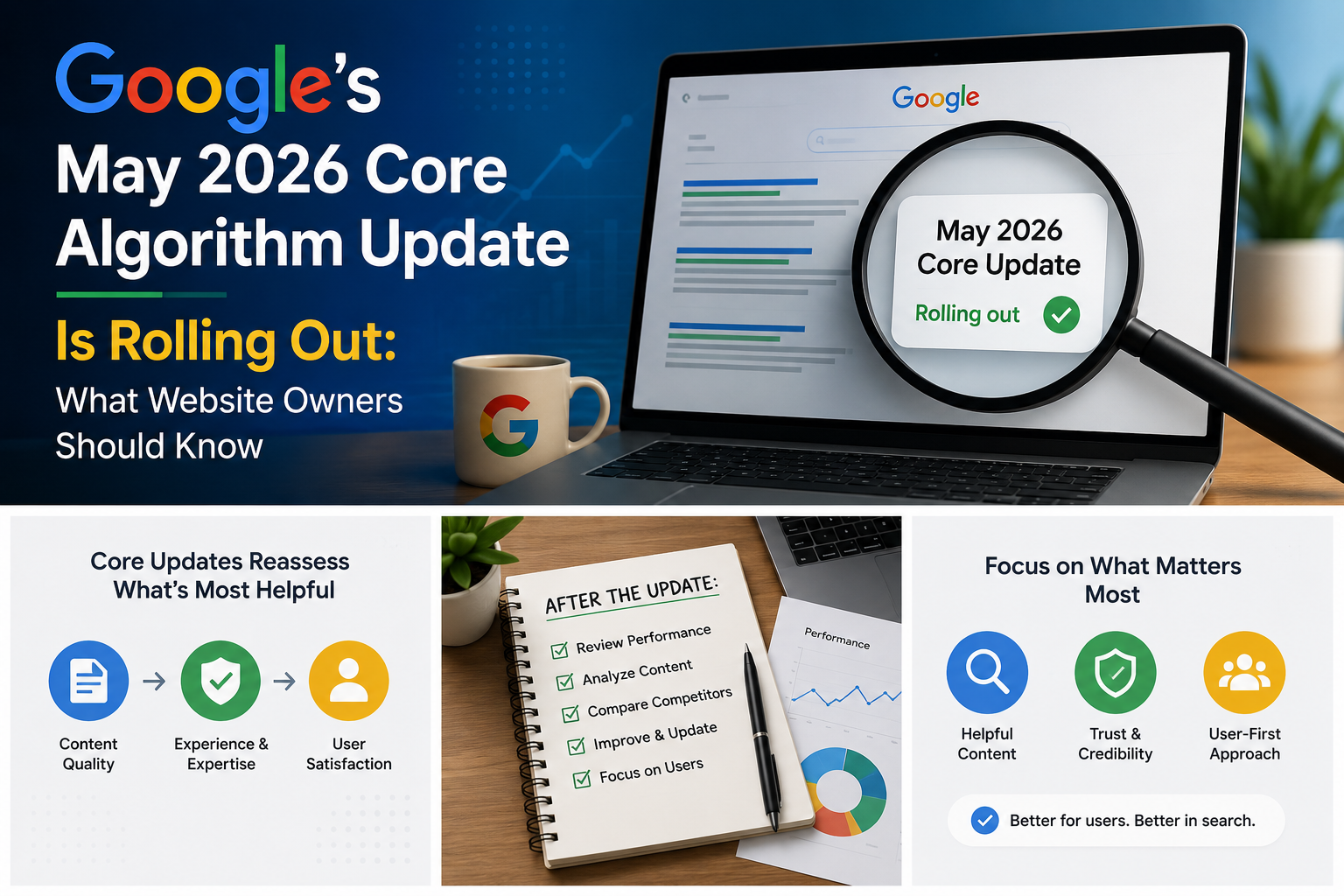
What Website Owners Should Know
Google has started rolling out its May 2026 core algorithm update, and as with most core updates, website owners may notice changes in rankings, traffic, impressions, and keyword visibility over the next couple of weeks.
According to Google’s Search Status Dashboard, the May 2026 core update began on May 21, 2026, and the rollout may take up to two weeks to complete.
What Is a Google Core Algorithm Update?
A core algorithm update is a broad change to how Google evaluates and ranks content across search results.
Unlike a small technical adjustment or a spam-focused update, a core update is not usually aimed at one specific issue, industry, or website type. Instead, Google uses these updates to improve how its systems understand which pages are the most helpful, reliable, relevant, and satisfying for searchers.
Google compares core updates to refreshing a list of top recommendations. A website that drops after an update is not necessarily being penalized. It may simply mean that Google is reassessing the search landscape and deciding that other pages better match what users are looking for now.
How Often Do Core Updates Happen?
Google typically releases core updates several times per year. In recent years, these updates have become a normal part of SEO, with multiple confirmed updates happening annually.
For example, Google’s ranking update history shows several major updates over the past few years, including the March 2026 core update, December 2025 core update, June 2025 core update, March 2025 core update, and multiple core updates throughout 2024 and 2023.
Because these updates can take days or weeks to fully roll out, ranking movement during the update window can be unstable. A site may lose visibility one day, recover later in the rollout, or see delayed changes after the update completes.
What Has Been Affected by Core Updates in the Past?
Historically, core updates have impacted many areas of organic search, including:
- Blog content and informational pages
- Local service pages
- Product and category pages
- Review-based content
- Affiliate content
- AI-generated or thin content
- Pages with outdated or generic information
- Sites with weak trust signals
- Websites relying heavily on search-first content instead of user-first content
Some sites see gains because their content is being better recognized. Others see losses because competitors may now be viewed as more helpful, complete, current, or trustworthy.
The biggest impacts usually happen when a site has content that is thin, outdated, overly generic, poorly organized, lacking expertise, or not fully answering the searcher’s intent.
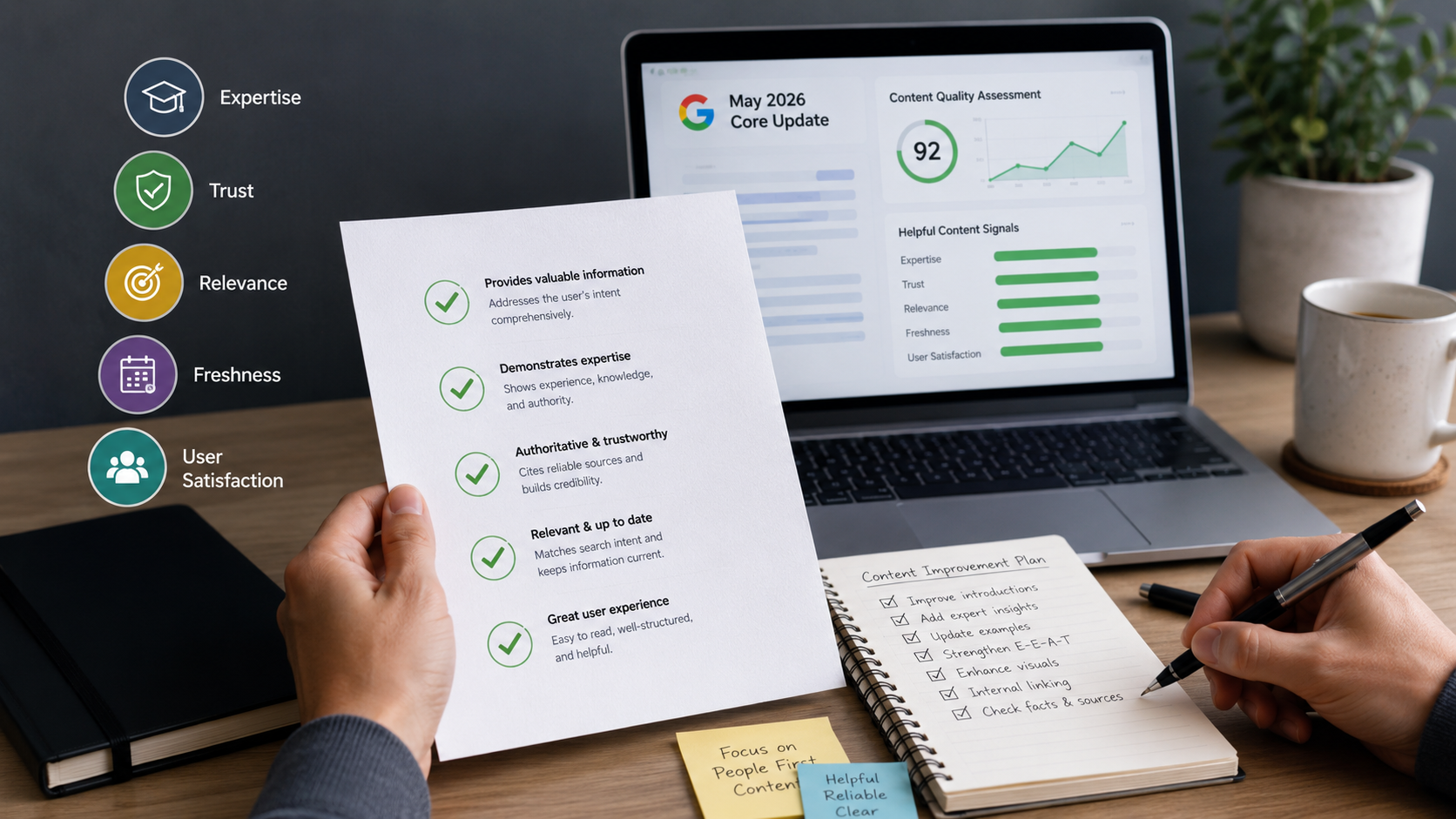
What Is the May 2026 Core Update Doing?
At this stage, Google has not released a detailed breakdown of specific systems or ranking factors being changed in the May 2026 core update. The official dashboard only confirms that the update has been released and that the rollout may take up to two weeks.
Based on Google’s general guidance, this update should be viewed as another broad effort to improve search quality by rewarding content that is genuinely helpful, reliable, and aligned with what users are trying to find.
That means this is not the time to chase shortcuts or make panic changes. It is the time to look at whether your website is clearly serving users better than competing pages in the search results.
Best Practices for Handling a Core Update
The first rule is simple: do not panic during the rollout.
Google specifically recommends waiting until a core update has finished rolling out before doing a full performance analysis. It also recommends waiting at least a full week after the update completes before comparing Search Console data.
Once the rollout is complete, review:
- Which pages lost traffic or rankings
- Which pages gained visibility
- Which queries changed the most
- Whether the drop affected Web Search, Images, Video, Discover, or another search area
- Whether competitors now have better, more complete content
- Whether the affected pages are outdated, thin, duplicated, or lacking clear expertise
If rankings drop slightly, drastic changes may not be necessary. If rankings fall significantly, that is when a deeper content and SEO review makes sense.
Things to Look Out For
During and after the May 2026 core update, website owners should watch for:
Sudden keyword drops
A few position changes are normal. Large drops across important keywords may signal that Google is reassessing the quality or relevance of those pages.
Traffic declines on top-performing pages
Pay close attention to pages that historically brought in leads, sales, form fills, or calls.
Competitor movement
If competitors moved above you, study what their pages offer that yours do not. Look for better structure, stronger answers, more current information, original insight, better trust signals, or clearer calls to action.
Thin or generic content
Pages that say the same thing as every other website are more vulnerable. Add real expertise, examples, FAQs, service details, location relevance, proof, and useful next steps.
Outdated information
Old statistics, stale service descriptions, outdated screenshots, and old blog posts can hurt trust and usefulness.
Over-optimized SEO content
Pages written more for Google than for people may struggle. Content should be clear, helpful, natural, and written with the customer’s actual questions in mind.
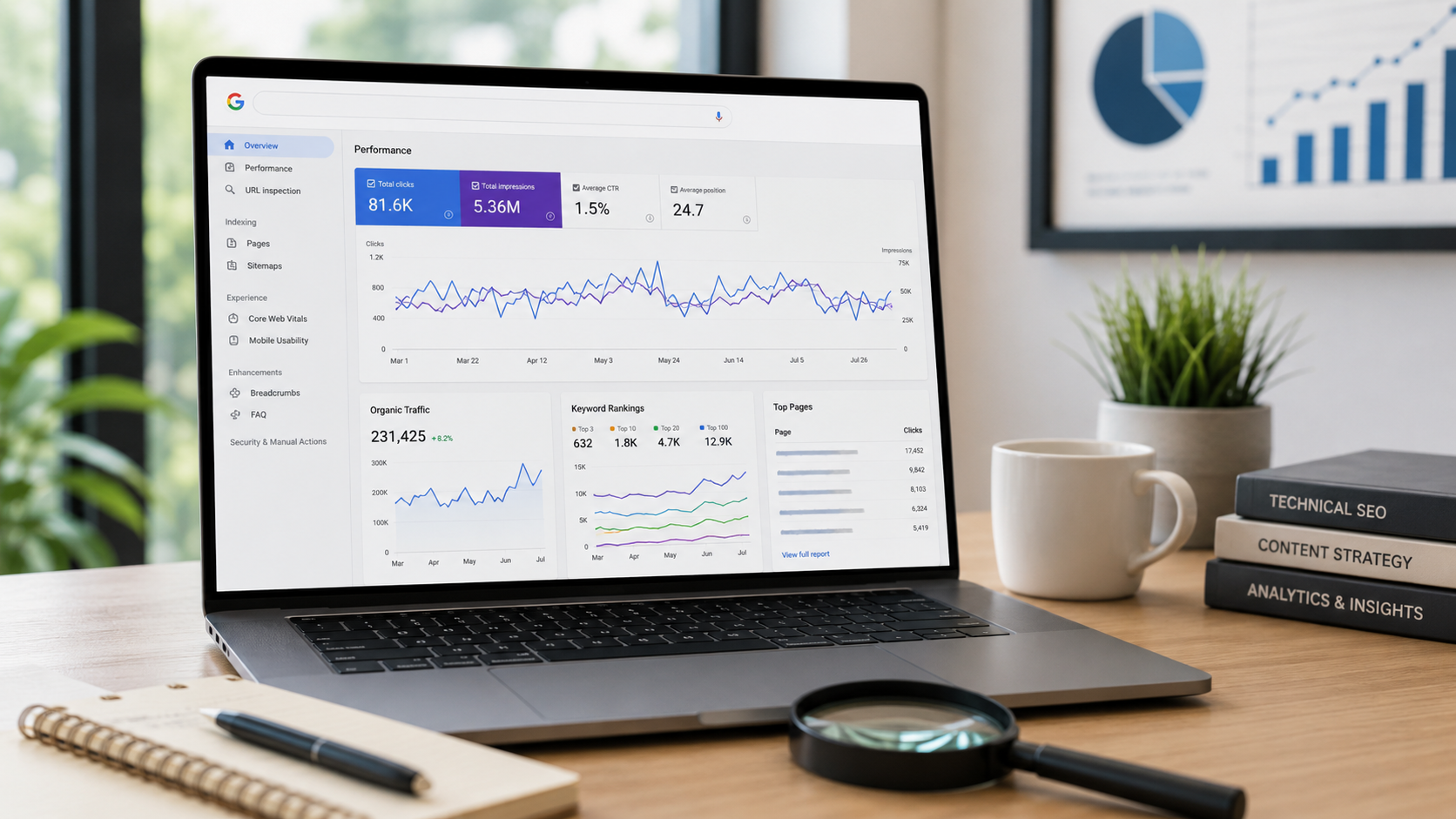
What Should You Do Next?
For now, monitor your analytics and Search Console, but avoid making rushed changes while the update is still rolling out.
After the update is complete, review your most important pages and ask:
- Does this page fully answer the searcher’s question?
- Is it more helpful than the pages currently ranking above it?
- Does it show real expertise or is it generic?
- Is the information accurate and current?
- Is the page easy to read, navigate, and act on?
- Does the content support real business goals, not just rankings?
Core updates are not just an SEO problem. They are a reminder that Google is constantly trying to match users with better answers. The best long-term strategy is to build a website that is genuinely useful, trustworthy, and aligned with what your customers are actually searching for.